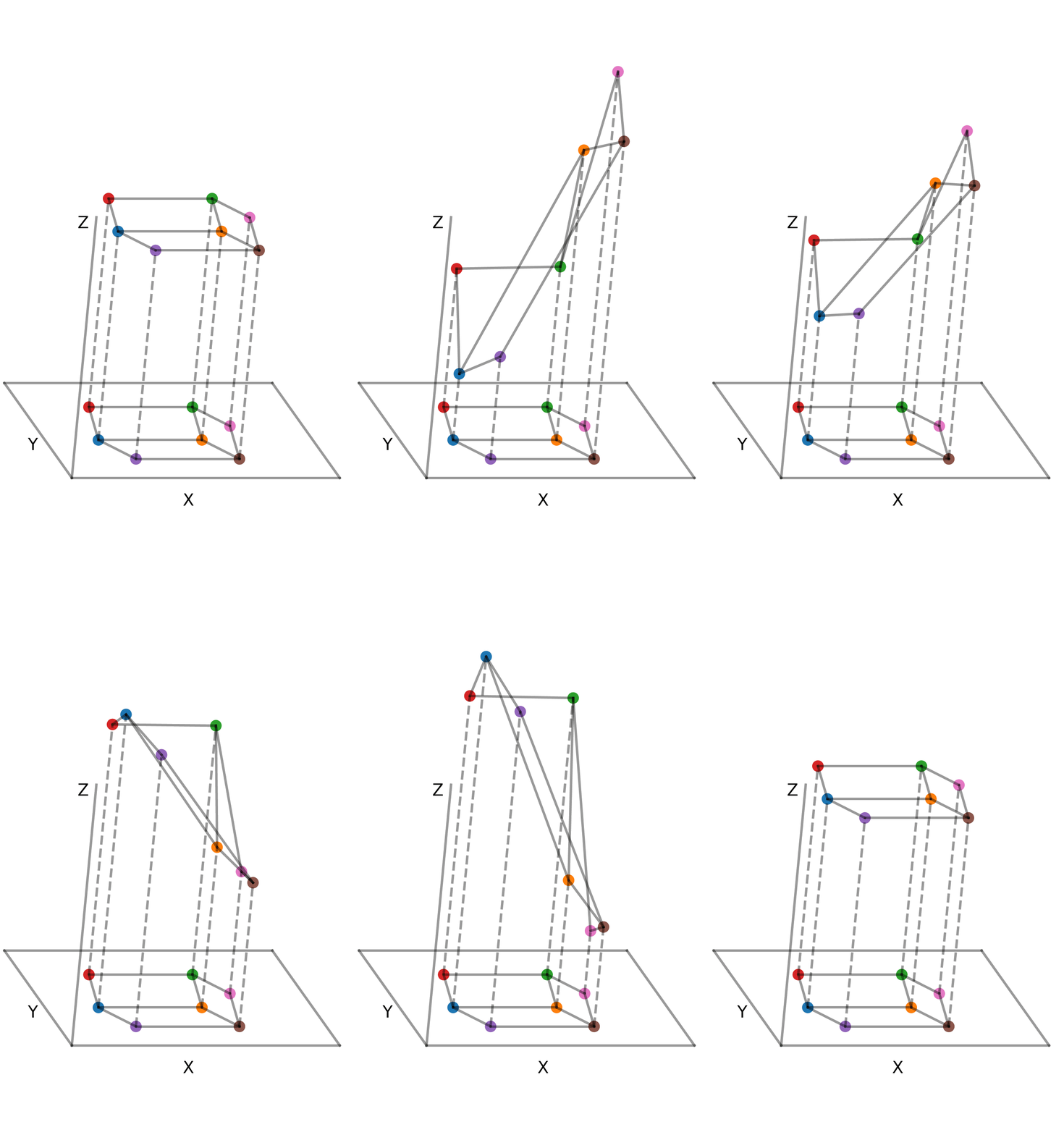
Animation 1: A single image, shown in the XY plane, may be produced by an infinite number of 3D configurations.
On each trial of the shape reconstruction experiment, a subject was shown a static reference image and a rotating, adjustable, 3D shape. The subject's task was to adjust the 3D shape until it matched their 3D percept of the static reference image. Subjects were instructed to pay attention to overall aspect ratios when making this judgment, rather than focusing on a particular part of the object. Subjects performed the experiment monocularly.
A correct perspective image on the retina will occur when the eye is placed inches from the center of the monitor along the monitor's normal. Viewing distance should be whatever is necessary so that the largest image in the three demo trials occupies approximately 25 degrees of visual angle. If the largest image is inches in diameter on your computer screen, then the viewing distance should be .
*This demo requires a fairly modern GPU to run smoothly.
Monocular 3D reconstruction is an ill-posed inverse problem. It is ill-posed because an infinite number of 3D configurations could have generated any given 2D image. Animation 1 is intended to emphasize this point, showing a selection of 3D shapes projecting to the same image on the XY plane. Despite the fact that many 3D interpretations are possible, it is difficult to perceive anything but a rectangular prism when considering the image in the XY plane. The visual system is utilizing some a priori beliefs to select a single 3D interpretation when many are possible. Arguably the most important objective in the study of monocular 3D perception is to infer the constraints that the visual system employs to arrive at a unique and often accurate 3D interpretation.
Animation 1: A single image, shown in the XY plane, may be produced by an infinite number of 3D configurations.
One constraint of particular importance is mirror symmetry. When a subject is shown an image of a mirror symmetrical object, very often their 3D percept is mirror symmetrical. Furthermore, symmetry is pervasive in the natural environment. Animals are bilaterally symmetrical because of the way they move. Parts of plants are radially symmetrical because of the way they grow. It is argued that symmetry is a key assumption the visual system makes in interpreting a single 2D image.
When provided an orthographic image of a mirror symmetrical object, the assumption of mirror symmetry reduces the set of possible 3D interpretations to a one parameter family. The one parameter family is visualized in Animation 2. Each of the symmetrical 3D shapes that could have generated the orthographic image is associated with a single parameter, the slant of its symmetry plane. Hence the name, 'one parameter family'.
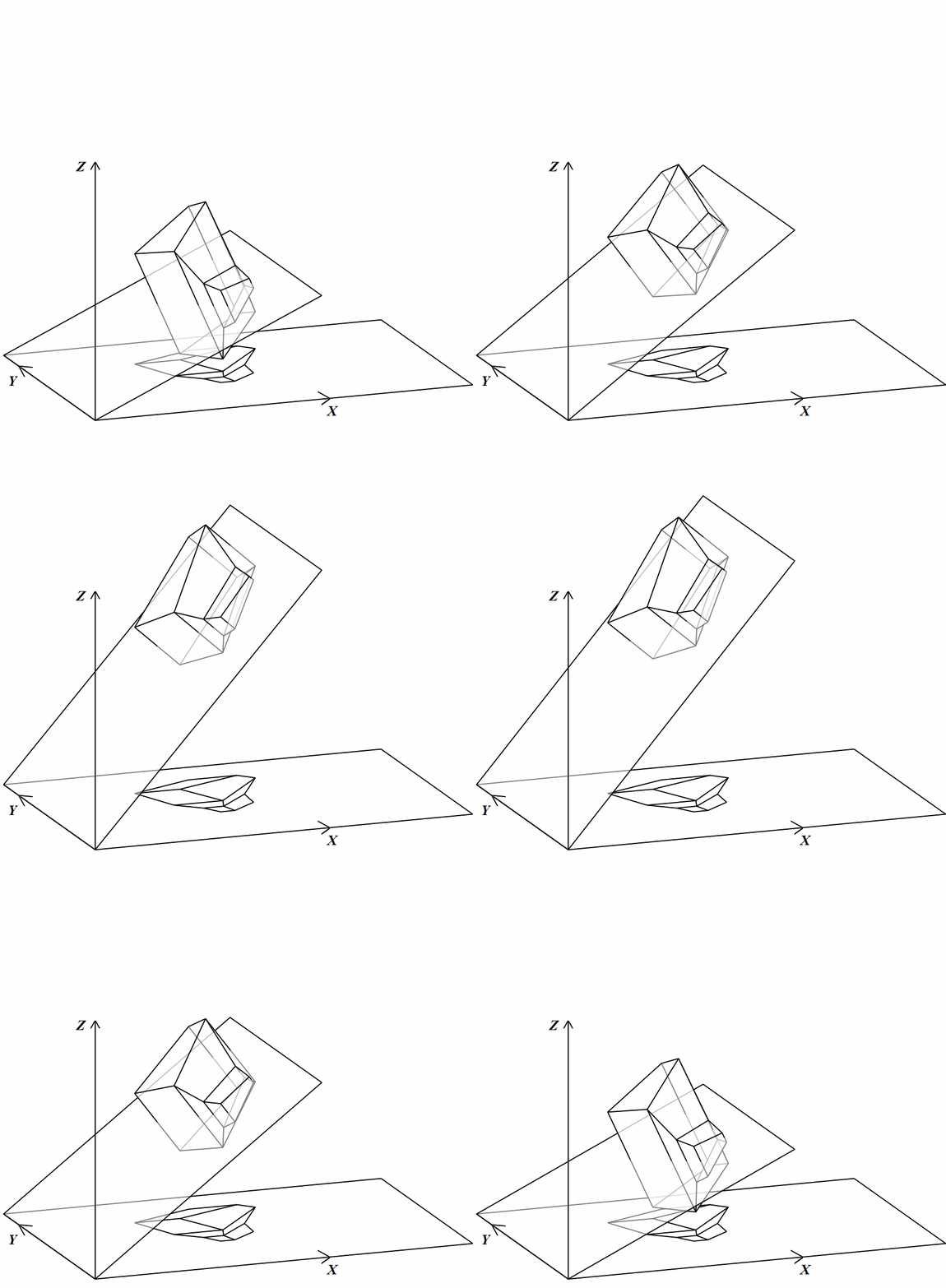
Animation 2: Shown is the one parameter family associated with an orthographic image of a mirror symmetrical polyhedron. Credit: Zygmunt Pizlo, Yunfeng Li, Tadamasa Sawada, Robert M. Steinman, Source: http://shapebook.psych.purdue.edu/2.2/
In this experiment, the subject is provided a single perspective image of a symmetrical object, and asked to choose amongst the 3D shapes in the one parameter family associated with the orthographic image of the object. Animation 2 shows that each member of the one parameter family is a stretched version of another member of the one parameter family. One can therefore also think of a shape reconstruction experiment as an aspect ratio recovery experiment.
No, the adjustable shapes were rotated 60 degrees in depth relative to the reference shapes. They then rotated about a horizontal axis. This prevents the rotating shape from ever generating the reference image. In addition, the adjustable 3D shape has been uniformly size scaled relative to the reference shape and translated slightly. These manipulations encourage the subject to pay attention to the 3D shape, rather than trying to employ some shortcut based on comparing 2D images.
In the experiment an object was shown from the same viewing direction (but different simulated viewing distances) three to five times. It is reasonable to ask if a subject's report when shown a particular object was influenced by their report when shown that same object earlier in the experiment. To try to limit the effect of memory, at least 15 trials showing different objects took place between presentations of the each object.
Arrange a 32" 4K monitor and the subject's position using a chin-forehead rest so that (1) the line from the center of the monitor along it's normal points at the subject's eye and (2) the subject's eye is 20" from the monitor. Cover the subject's other eye with an eyepatch. The experiment was conducted in an otherwise dark room.